If you have heard of VR arenas but do not quite understand what they are physically and how they make money, this article explains the format from scratch.
The simplest way to put it: it is a large empty hall where people in VR headsets see not walls but a game world — and walk through it freely on their own feet.
What it looks like physically
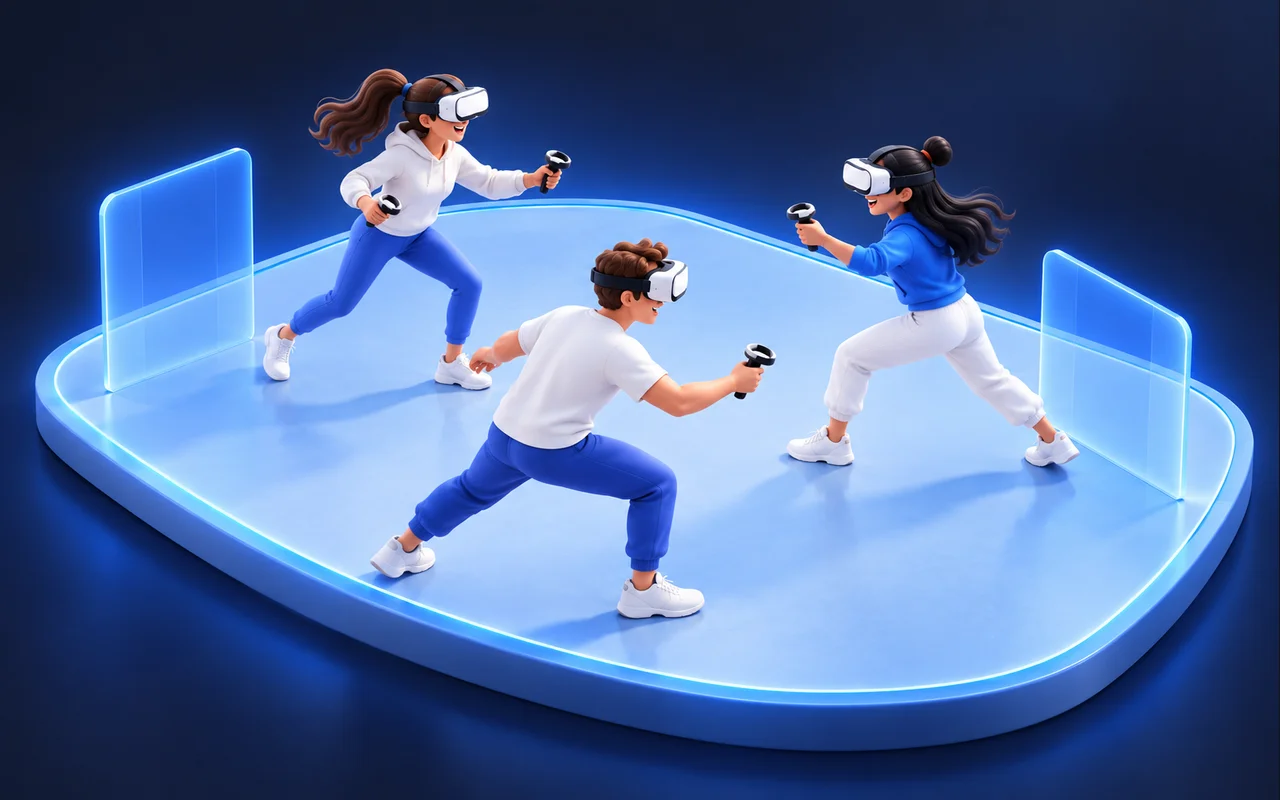
Picture a space the size of a small gym. The floor is marked out, the equipment stands along the perimeter, and inside there is nothing: no furniture, no columns, no obstacles.
Guests put on headsets and pick up controllers. From that moment the hall turns, for them, into a ruined city or a space station. They see each other as game characters, talk, move around, interact. From the outside it looks like a group of people running around an empty hall; from the inside it is a complete world.
How it differs from VR at home
A home headset gives you the picture but not the space. The difference is fundamental:
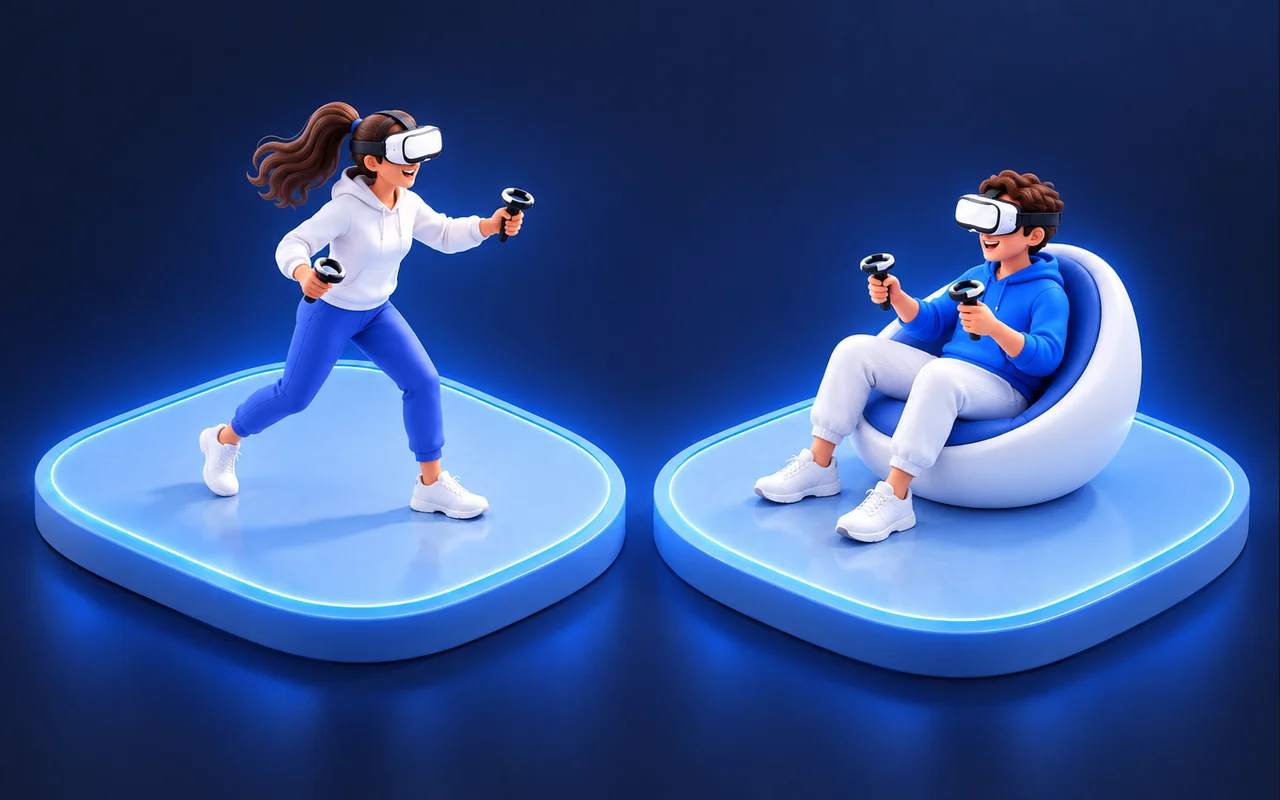
- At home you stand still within a couple of metres and move with a joystick
- In the arena you walk on your own feet. Distance in the game equals distance in the real hall
- At home you play alone or with people online
- In the arena up to ten people share one physical space and see and hear each other directly
It is exactly this free movement together with a group of friends that creates the effect people come for.
A short definition
A VR arena is a venue where virtual reality is combined with real movement around a hall. Technically the format is called free-roam.
How a guest's visit goes
- Booking a slot online or on site — the arena runs on a schedule, like a bowling alley
- A short briefing: the rules, the boundaries of the field, how to hold the controller
- Gearing up: headset, controllers, a hygienic liner
- The game session — usually several short rounds with breaks
- Time in the lounge: drinks, discussion and often a second round
Who comes
Contrary to expectations, not only gamers. According to the network's data, the guest mix looks like this:
- Children aged 6–14 with their parents — 45%
- Adults aged 25 and over — 35%
- Teenagers and young people aged 15–25 — 20%
Half of the flow is families. A significant share of revenue comes not from one-off sessions but from events: birthdays, corporate parties, team building.
Why it works as a business
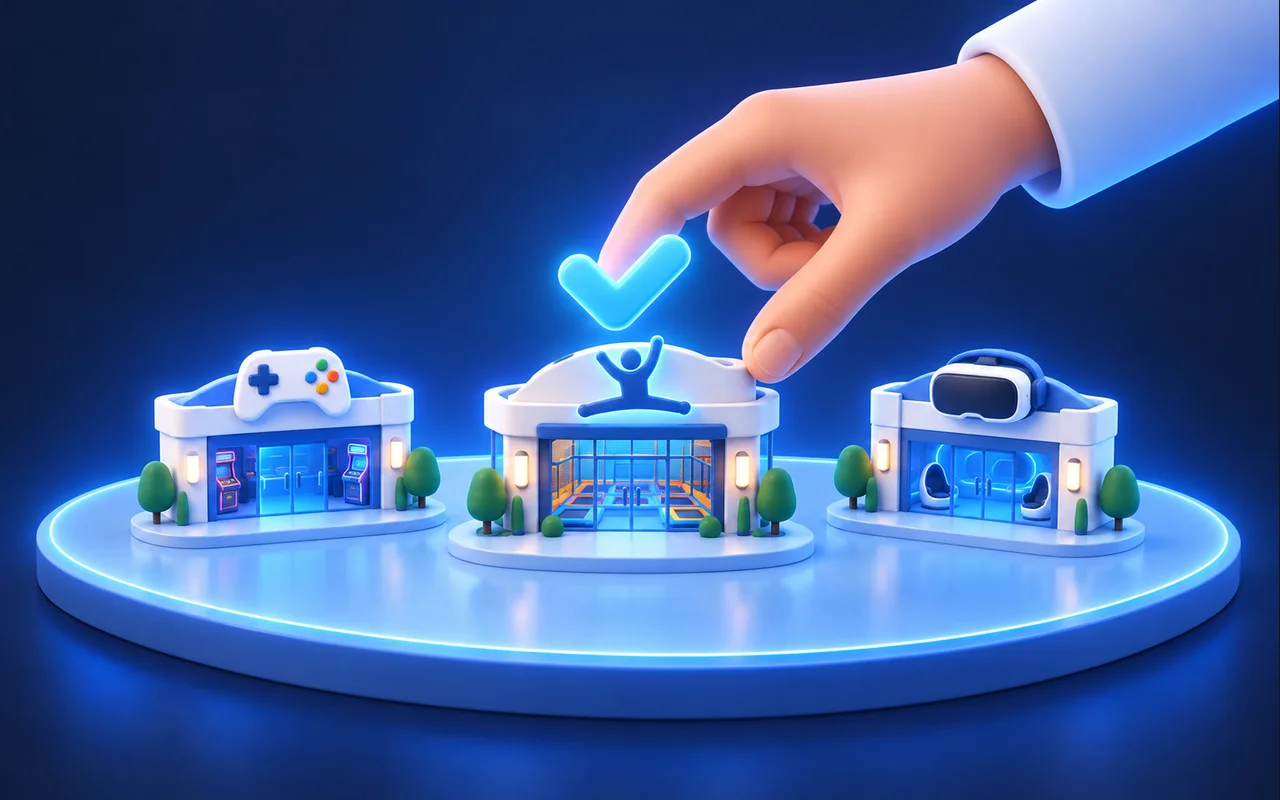
Economically an arena is built like any venue with hourly occupancy: you have a hall, a schedule and a capacity. The task is to fill the slots.
It differs from neighbouring formats in three ways:
- Renewability. A trampoline is still the same trampoline a year later, while the game content is updated — there is a reason to come back
- Compactness. The format starts from 150 m², unlike amusement parks
- All-season operation. The premises are indoors, and different guest groups produce peaks at different times of the year
To see the format for yourself, watch the video tour of a working park on the franchise page — it also shows how the operation works from the inside.