A search for “the best VR franchise” usually lands in directories where networks are ranked by the size of their advertising package. Something else is more useful: understanding how they actually differ, and only then looking at the names. Below are the criteria and the public terms of the main players as of September 2026.
In short
Compare on four things rather than entry price: whose game library it is, franchise or licence, how much floor area is really needed, and what support includes. Entry costs across the large networks differ several times over — from $40K to $165K and up.
What to compare
- Whose content it is. A network either develops its games or licenses someone else's. In the first case updates are continuous and part of the payment; in the second the library is decided by the rights holder
- Franchise or licence. A franchise gives you a brand, standards and marketing but requires operating under someone else's name. An equipment licence leaves the brand yours — and the promotion entirely yours too
- Floor area. The spread is wide: some need 100 m², others 370. This decides what premises you will even be looking for
- What is included. Training, the design project, a booking system, launch marketing — or only the hardware delivery
The main players
The figures below come from the networks' own materials and franchise directories, as of September 2026. Terms change, and it is worth requesting them directly before deciding.
- Zero Latency — an Australian network with over 100 venues. It works through operator licences rather than franchising: the brand and the rules stay yours. The system starts at $165K, minimum area is around 100 m² with about 370 m² recommended, and it targets cities from 200,000 people
- Another World — over 400 venues across some fifty countries, its own game development, up to 14 players at once. The network puts the investment at $40–60K depending on the city
- Sandbox VR — a premium format with a high bar: the network states financial requirements for partners measured in millions of dollars of liquid assets
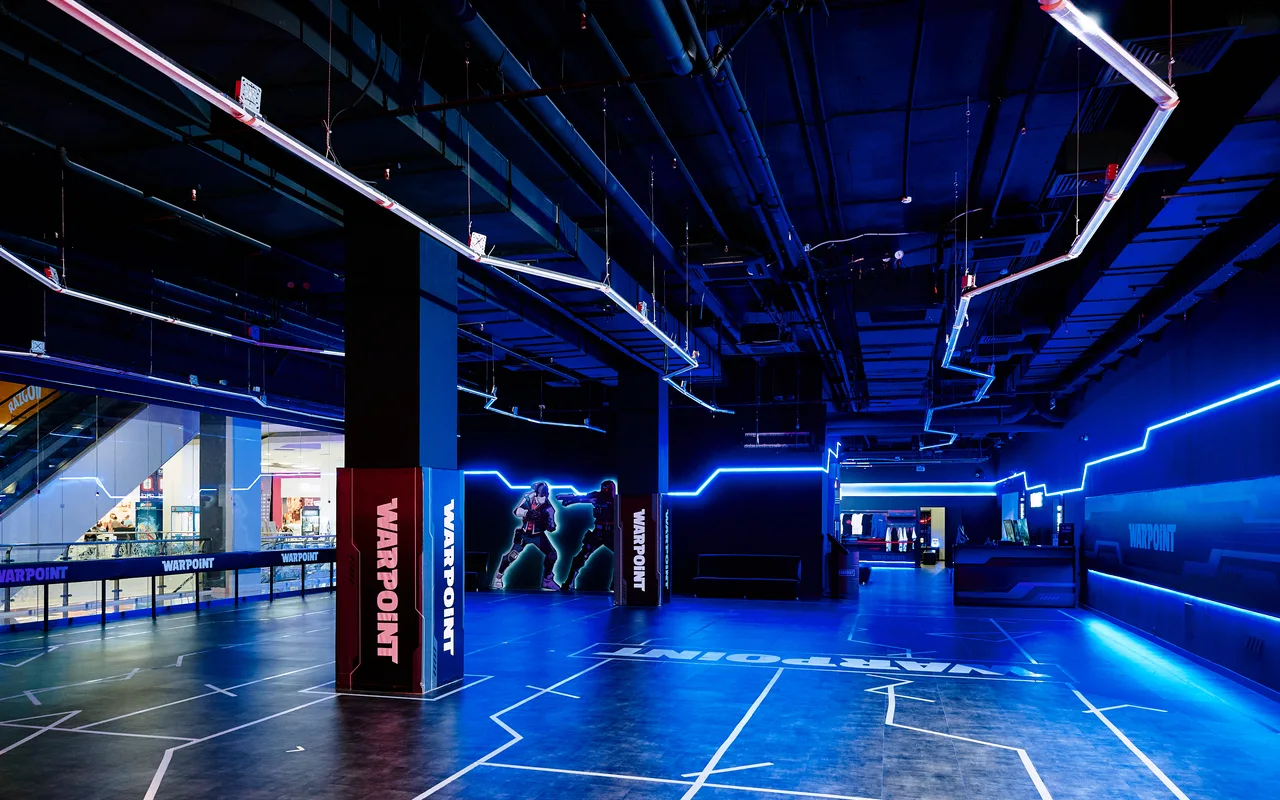
- WARPOINT — 300+ locations in 18 countries, its own game library. The ARENA format starts at $55K and 150 m², the PARK format at $120K and 400 m². The franchise fee is from $15K, royalties are 7% from the fifth month of operation
Licence versus franchise
This is the main fork, and it matters more than the price. Under a licence you buy hardware and the right to use the games, and everything else — brand, promotion, service standards — is on you. Under a franchise you get the whole system including a name the guest already knows, but you work by its rules.
A licence makes sense if you already run an entertainment centre with a flow of guests. A franchise makes sense if the business starts from zero and you have no experience in the industry.
Why entry price alone tells you little
Entry price tells you about budget, not about returns. A network with a $40K threshold and one with a $165K threshold are usually built for different premises, different hall capacity and a different average bill. The question is not what it costs to get in, but what the venue earns at your rent and your occupancy.
The second underrated point is content updates. Guests come back for new maps and modes; a network that does not release them regularly loses repeat visits — and those are the backbone of revenue after the first year.
What to ask any network before deciding
- How many venues opened in the last year, and how many closed
- How often new games ship, and whether updates are included in the payment
- What floor area is really needed — the minimum and the recommended
- What support covers after the launch, not before it
- Whether you can speak to current partners directly
The last point is the most revealing: a network that will not put you in touch with working partners has answered all the other questions at once.
Working it out for yourself
Every comparison ends in arithmetic for your own city: the rent and salaries there matter more than the difference in franchise fees. The calculator on this site builds a five-year financial model, and the map shows where the network already operates — in a city with a working arena the demand has been proven on real guests.